
Court to Rule on Farmers' Seed Sovereignty
High Court will determine constitutionality of seed laws restricting farmer seed exchange in November.
Read Full Story

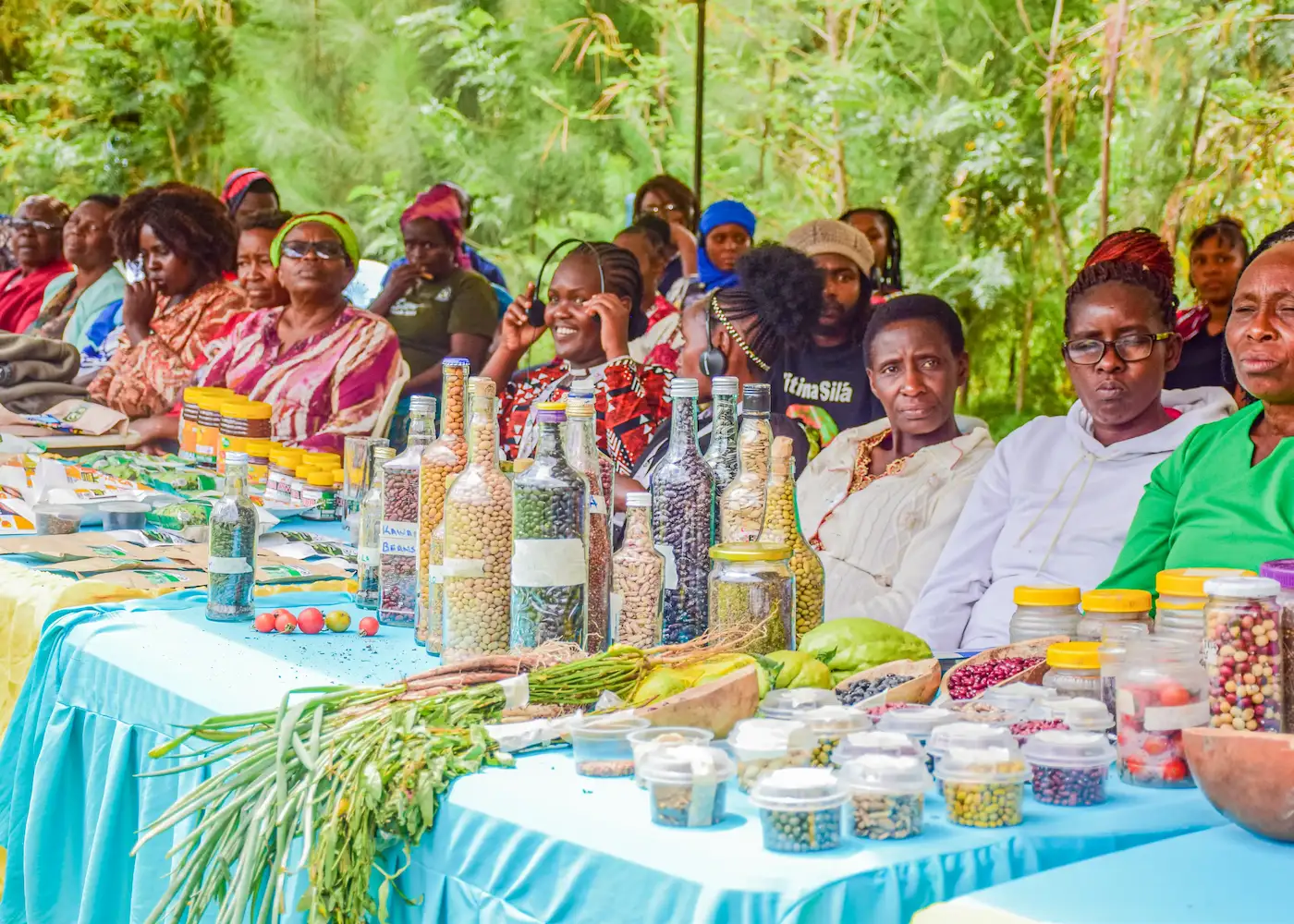
Kenya has an estimated 7.5 million smallholder farmers producing more than 70% of the food consumed locally and exported globally. For years, smallholder farmers across Kenya have been engaged in a legal battle with the government over a law that criminalised the old age practice of saving, sharing and exchanging indigenous seeds.
In 2022, a group of 15 Kenyan smallholder farmers petitioned the country's High Court, seeking to compel the government to review sections of a law that bans the sharing and exchange of uncertified and unregistered seeds.

Rural smallholder farmers in Kenya rely on informal farmer-managed systems to acquire seeds through seed saving and sharing, but the Seeds and Plant Varieties Act limits their access.
Kenya's government enacted the law in 2012 to develop, promote, and regulate a modern and competitive seed industry, but farmers are calling for its review.
The informal farmer-managed seed system allows farmers to store a portion of their seeds after harvesting, which guarantees them seeds for the next planting season.

In a decisive victory for food sovereignty and climate justice, the High Court on November 27, 2025, ruled in favour of smallholder farmers, declaring punitive sections of the Seed and Plant Varieties Act unconstitutional.
The judgment effectively decriminalises the age-old practice of saving, sharing, and exchanging indigenous seeds, affirming that Farmer-Managed Seed Systems (FMSS) are a protected right, not a criminal activity.
Under the punitive law, farmers faced jail terms of up to 2 years and a fine of 1 million shillings (about 7,800 USD) for selling or exchanging unregistered seeds.
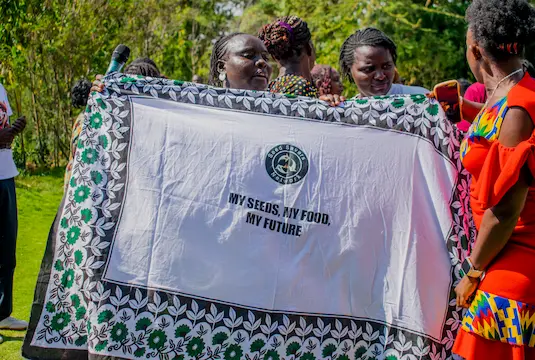
Farmer rights defenders had argued that the law gave control of the country's food system to multinational corporations.
In her judgment, Justice Rhoda Rutto declared unconstitutional sections of the Act which gave seed inspectors sweeping powers to raid seed banks and seize seeds meant for the next harvest, made it illegal for farmers to process or sell seeds unless they were registered seed merchants, gave extensive proprietary rights to plant breeders and none to farmers, and made it illegal for farmers to save or share seeds from their harvest without prior knowledge of seed proprietors.
Samuel Wathome, a smallholder farmer who was a petitioner in the case, says that "just like his grandmother did, he can now freely save seeds for his grandchildren without fear of police or prison".

Daniel Wanjama says the ruling provides economic relief for smallholder and marginalised farmers who couldn't afford certified seeds and were excluded entirely from formal seed markets.
"With the ruling, farmers can again rely on self-saved seeds, community seed banks, and informal exchange networks, reducing costs, improving access, and enhancing resilience, especially for low-income and marginalised farming communities", said Wanjama
Wanjama added that with more farmers having unlimited access to affordable seeds of their choice, more food will be produced for the population.

At the same time, Wanjama notes that the ruling gives way for regenerative, decentralised agricultural development through community seed banks, farmer networks, and locally adapted farming systems, which may improve nutrition, biodiversity, and ecological sustainability at local and national levels.
The ruling, according to experts, is a legal and policy shift that could influence not just Kenya but other African nations as a model of rejecting overly restrictive seed laws and investing in community-based seed sovereignty. "Going forward, farmers will have greater food sovereignty and community control over what they plant and eat, which underpins local diets, cultural food traditions, and agricultural heritage. This aligns with broader movements toward agroecology, sustainable farming, and climate-adaptation in agriculture," Wanjama concludes.

For the past three years, smallholder farmers in the East African nation of Kenya have been battling to overturn seed control regulations contained in a law that prohibits them from selling and sharing of unregistered and uncertified indigenous seeds. The petitioners wanted legal recognition and protection of Farmer Managed Seed Systems (FMSS) and the restoration of farmers' fundamental rights.
The Petition filed in 2022 was spearheaded by 15 smallholder farmers from Seed Savers Network challenging the constitutionality of the Seed and Plant Varieties Act (Cap. 326) of 2012 and the Seeds and Plant Varieties (Seeds) Regulations, 2016 with the Kenya Plant Health Inspectorate Service (KEPHIS) and the office of the Attorney General as respondents. Other civil society organisations and the Law Society of Kenya came in as interested parties in the case.
The law imposed a fine of up to KES 1,000,000, or imprisonment for up to 2 years, or both, for someone who, while not registered as a seed merchant, imports or packages seed for sale. The same penalty applies to anyone found selling or offering for sale seed that does not match the set certification standards, as well as giving false information to a seed inspector, showing false certificates, or obstructing inspectors
Join farmers from across the region to exchange indigenous seeds, share knowledge, and celebrate agricultural biodiversity.

Our rotating seed exchange program visits different communities to facilitate local seed sharing and preservation.
High Court will determine constitutionality of seed laws restricting farmer seed exchange in November.
Read Full Story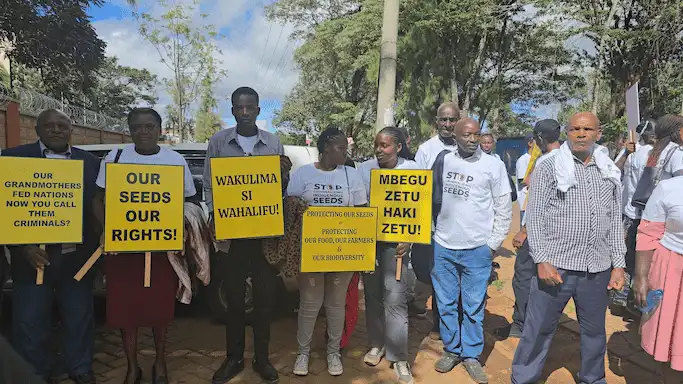
The Kenyan government is re-evaluating its national seed policy to accommodate farmer-managed seed systems.
Read Full Story How solar technology is helping farmers improve yields and preserve seed biodiversity.
Read Full Story Smallholder farmers push for legal rights to share indigenous seeds despite corporate opposition.
Read Full Story
Watch this video covering grassroots efforts to defend farmer seed rights in Kenya.
Watch Now
Experts say farmer-managed seed systems are key to responding to Africa's worsening food crisis.
Read Full Story